Taylor Griffin · 12 September 2026
Navigating Post-Migration Traffic Recovery Strategies for Niche Wellness Platforms in Competitive Markets
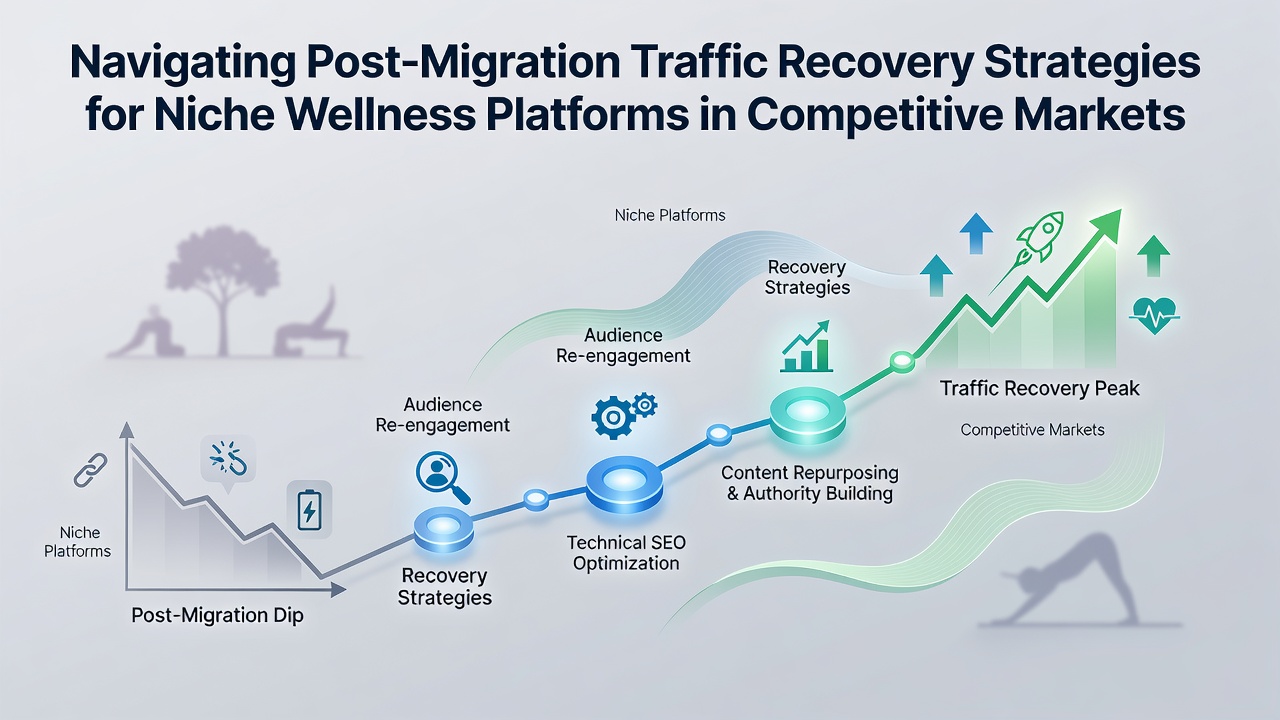
Site migrations present distinct challenges for niche wellness platforms operating in crowded digital spaces where yoga studios, meditation apps, nutrition guides, and holistic health communities compete for visibility, and data from multiple industry analyses shows that organic search traffic often drops sharply in the weeks following such transitions. Observers note that recovery depends on systematic approaches to technical fixes, content adjustments, and audience reconnection rather than quick fixes alone. Research indicates that platforms focusing on targeted user segments, such as those interested in plant-based nutrition or mindfulness practices, face additional pressure because search algorithms prioritize established authority signals in health-related queries.
Understanding Migration Impacts on Wellness Traffic
Platform operators frequently encounter indexing delays and ranking fluctuations after moving to new domains or architectures, while analytics reviews reveal that wellness keywords tied to seasonal trends like autumn wellness challenges lose momentum during these periods. Studies from academic sources highlight how backlink profiles weaken when old URLs fail to redirect properly, leading to lost referral value from partner blogs and health directories. In September 2026, figures released by health technology research groups showed that niche sites in the wellness sector recovered an average of 65 percent of pre-migration traffic within four months when structured recovery plans were applied consistently.
Technical Foundations for Traffic Rebuilding
Teams begin by auditing server logs and search console data to identify crawl errors, then implement comprehensive redirect maps that preserve link equity from prior content on topics like herbal remedies and stress reduction techniques. Experts have observed that updating XML sitemaps and submitting them promptly helps search engines reindex wellness-specific pages faster, whereas neglecting internal linking structures slows the process. Those managing competitive niches often coordinate with hosting providers to maintain site speed, since wellness users expect quick load times on mobile devices when browsing meditation resources or workout plans.
Content and Audience Reconnection Tactics
Content teams refresh existing articles with updated statistics and new examples drawn from recent wellness studies, while creating supporting materials that address user concerns about service continuity after the migration. Email sequences and community forums serve as direct channels to inform subscribers about the new platform location, and data shows these efforts reduce bounce rates from confused visitors. One study revealed that platforms incorporating user-generated stories about personal wellness journeys saw higher engagement metrics during recovery phases compared with generic outreach methods.

Building Authority Through Partnerships
Link-building campaigns target health-focused directories and regional wellness organizations across different markets, with researchers noting stronger results when outreach emphasizes mutual value rather than one-sided requests. Platforms in Australia and Canada have documented success by collaborating with local fitness associations and nutrition research bodies to earn contextual mentions. According to reports from the National Institutes of Health, establishing citations in peer-reviewed health portals contributes measurable improvements to domain authority over time. Meanwhile, social signals from wellness influencers help amplify reach in competitive search landscapes where paid channels dominate visibility.
Monitoring and Adjusting Recovery Efforts
Continuous tracking through integrated analytics tools allows teams to spot emerging patterns in user behavior, such as shifts toward video content on mindfulness practices or queries related to sustainable living. Adjustments follow from these insights, including refinements to meta descriptions that better match current search intent. Evidence suggests platforms that test variations in navigation menus and category structures achieve steadier traffic growth, particularly when they align updates with broader industry events like global wellness weeks.
Conclusion
Recovery from migration requires coordinated technical, content, and outreach activities tailored to the specific demands of niche wellness audiences. Data from September 2026 onward continues to underscore the value of methodical implementation, while platforms that integrate feedback loops and maintain consistent monitoring position themselves for sustained visibility amid ongoing market competition.