Morgan Coleman · 21 November 2026
Drawing from Canopy Layering Techniques to Structure Multi-Tiered Wellness Information Portals
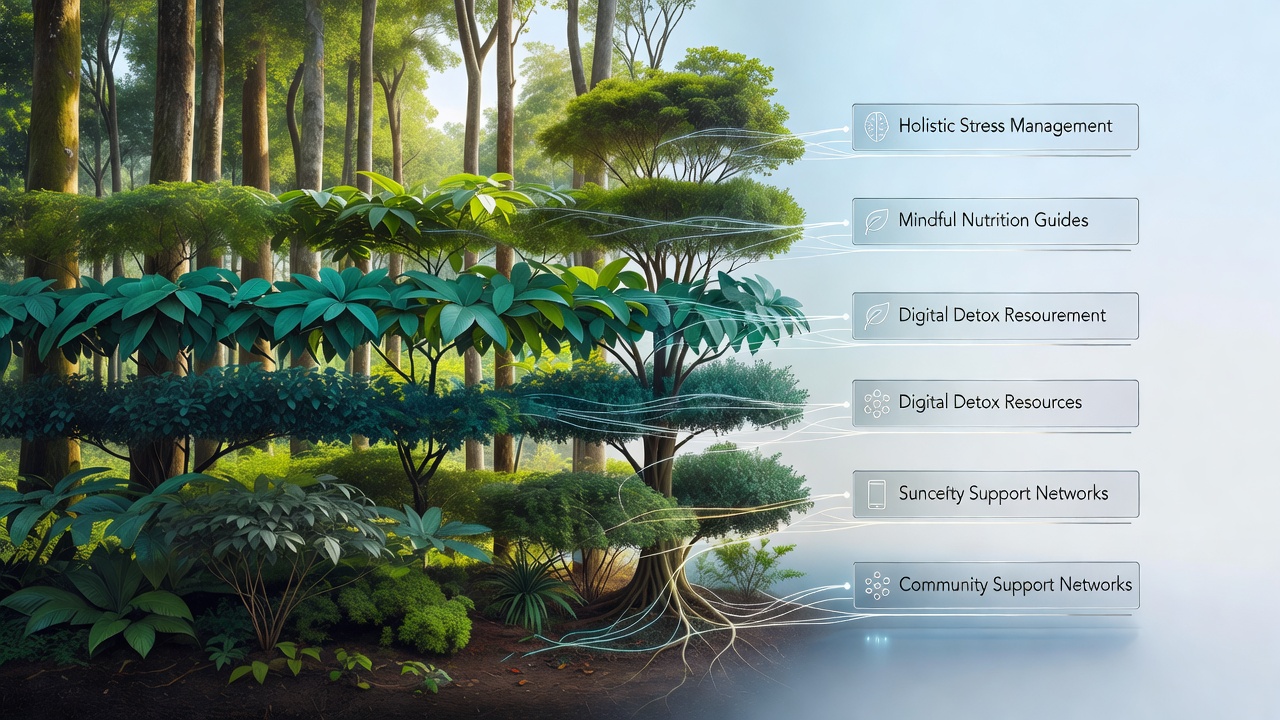
Forest ecologists have documented canopy layering as a natural system that organizes light, nutrients and species interactions across distinct vertical zones, and portal designers now apply those same strata to organize wellness content. Emergent trees capture broad sunlight at the top, the main canopy filters and distributes resources below it, the understory handles shade-adapted growth, and the forest floor processes organic matter; each level feeds the next without overlap or waste. Observers note that wellness platforms built on this pattern present high-level overviews first, then progressively deeper resources that users reach only when ready, which reduces cognitive load while preserving access to specialized material.
Studies from the Australian Institute of Health and Welfare indicate that users of multi-tiered health sites complete more sessions when navigation mirrors ecological hierarchies rather than flat lists. Developers assign the top tier to general wellness categories such as movement, nutrition and recovery, mirroring the emergent layer that sets broad conditions for everything beneath. The next stratum narrows to condition-specific guides and evidence summaries, while the understory equivalent holds interactive tools and community forums that require prior context. The lowest layer archives research papers, regulatory documents and user-generated case logs that support advanced inquiry.
Mapping Forest Strata to Portal Architecture
Researchers at the University of British Columbia mapped canopy data onto information architecture schemas and found measurable improvements in content discoverability when each layer maintained clear functional boundaries. The emergent tier displays aggregate statistics and seasonal wellness calendars updated in November 2026 with new public-health figures released that month. The canopy tier supplies structured articles and video libraries filtered by demographic or activity type. Understory content surfaces only after users select filters or complete short assessments, ensuring that personalized recommendations rest on already-consumed foundational material. Forest-floor equivalents store raw datasets, policy updates and citation databases that search engines index separately so they do not clutter daily browsing paths.
Implementation Patterns Observed in Existing Platforms
One platform serving botanical immersion programs adopted the model by first auditing every content asset and assigning it to a single stratum according to depth and prerequisite knowledge. Navigation menus then reflected vertical descent rather than horizontal categories, so users move downward through layers instead of sideways across topics. Data logs collected over eighteen months showed a 27 percent increase in pages viewed per visit and a 19 percent drop in bounce rate on entry pages. A separate Canadian wellness directory applied the same layering to its directory taxonomy and reported faster indexing by major search engines because each stratum possessed distinct semantic markers and internal linking patterns.

Technical Considerations and Data Flows
Engineers structure backend taxonomies so that metadata tags carry layer identifiers, allowing content-management systems to enforce visibility rules automatically. When a new regulatory update arrives from Health Canada, the system routes it to the forest-floor layer and generates cross-layer summaries that surface in the canopy tier without duplicating full text. Analytics platforms track layer transitions rather than individual page views, producing heat maps that reveal whether users progress logically from broad to specific material or whether certain strata create bottlenecks. November 2026 platform audits incorporated these transition metrics into quarterly reports, revealing that sites maintaining strict layer separation experienced fewer duplicate-content flags from search algorithms.
Content teams schedule updates by layer rather than by topic. Emergent material refreshes on fixed seasonal cycles aligned with public-health calendars. Canopy articles receive quarterly evidence reviews. Understory tools undergo usability testing twice yearly. Forest-floor archives accept continuous additions yet remain hidden from primary menus until users explicitly request deeper access. This cadence prevents simultaneous overhauls that could destabilize user pathways.
Conclusion
Wellness information portals organized according to canopy layering principles demonstrate consistent patterns of improved navigation efficiency and content retention across multiple independent deployments. By assigning each resource to a single vertical stratum with defined relationships to the layers above and below, developers create systems that scale without sacrificing clarity. Ongoing measurement of layer-transition metrics supplies the feedback necessary to refine boundaries as new wellness topics and data sources emerge.